
Shopify CRO Audit to Improve Your Store's Conversion Rate
Your Shopify store attracts visitors, but sales aren't as high as expected? The problem isn't always traffic, price, or product. Very often, it lies in the shopping experience: an insufficiently clear value proposition, a product page that doesn't address objections, overly complex navigation, a cart that hinders the decision, or a mobile experience that lacks fluidity.
At Agence Shop, we conduct Shopify CRO audits to precisely identify what's preventing your visitors from buying, and then transform these findings into a concrete action plan. The goal isn't to multiply theoretical recommendations, but to prioritize improvements that can have a real impact on your conversion rate, average order value, and the profitability of your store.
Your Shopify store has traffic, but isn't converting enough?
A Shopify store can be beautiful, fast, technically sound, and yet underperform commercially. This is one of the most frequent pitfalls in e-commerce: confusing perceived quality with commercial effectiveness. A site can give a good visual impression while leaving too many questions unanswered at the moment the user has to decide whether to add to cart, continue their purchase, or leave the page.
The conversion rate measures your store's ability to turn a visit into an order. But behind this figure lie several realities. A visitor might abandon because they don't understand your offer quickly enough, because they doubt the product's quality, because they can't find delivery information, because variants are difficult to choose, because the site seems slow on mobile, or because the cart doesn't make them want to finalize the purchase enough.
A Shopify CRO audit allows us to move beyond subjective impressions. Instead of asking whether a page is "pretty" or "modern," we analyze whether it actually helps the user progress through their buying journey. Each element is studied according to its commercial role: capturing attention, clarifying value, reassuring, guiding, reducing effort, overcoming objections, and facilitating decision-making.
This approach is particularly important on Shopify, as the platform allows you to move very quickly: install a theme, add apps, create sections, launch campaigns, modify product pages. But this ease can also create complexity. Over time, a store accumulates blocks, apps, promotional messages, pop-ups, badges, and scripts that don't always work in the same direction. The CRO audit is precisely for bringing order to the experience.
What is a Shopify CRO audit?
A Shopify CRO audit is an in-depth analysis of your store with a precise objective: to understand why a portion of your visitors are not buying, and then to define the actions to take to improve the conversion rate. CRO stands for Conversion Rate Optimization. In a Shopify context, this involves studying UX, design, page structure, content, performance, cart, checkout, analytics data, and the constraints specific to your theme.
Unlike a simple graphic audit, a CRO audit is not limited to saying whether the site looks professional. It seeks to understand buying behavior. Does the visitor immediately understand what you are selling? Do they perceive the difference from your competitors? Is important information provided at the right time? Are calls to action visible? Is the reassurance credible? Does the mobile journey allow for frictionless purchasing?
The value of a CRO audit doesn't only lie in the number of points raised. It primarily relies on prioritization. Not all optimizations have the same impact. Changing a button color might be marginal if the product page doesn't address the customer's real objections. Adding a reassurance section can be useful, but only if it appears in the right place. Reducing loading time is important, but you still need to know which pages are actually slowing down conversion.
A good Shopify CRO audit must therefore provide a clear understanding of your store: what is already working, what is blocking purchases, what needs to be fixed quickly, what can be tested later, and what would require a deeper redesign. It is this distinction that allows for moving from an interesting diagnosis to a truly actionable plan.
Our CRO approach on Shopify
Our approach is based on a simple idea: a high-performing Shopify store should not just present products; it should guide a decision. Each page must play a specific role in the purchasing journey. The homepage establishes the brand and directs. Collections facilitate choice. Product pages trigger desire and address objections. The cart confirms the decision. The checkout must remain simple, consistent, and reassuring.
To audit a store, we cross-reference several perspectives. UX analysis identifies visible frictions in navigation. E-commerce analysis evaluates the quality of the offer, sales mechanics, bundles, free shipping thresholds, or incentives for average order value. Shopify analysis helps understand what depends on the theme, apps, templates, meta fields, or technical structure. Data analysis finally allows us to verify where visitors are actually dropping off.
This combination is essential. A conversion problem might appear to be graphic, when it is strategic. Conversely, a performance drop might be attributed to traffic when the store has a very concrete obstacle on mobile. On Shopify, the best gains often come from the connection between these disciplines: a better message, better visual hierarchy, a more convincing product page, clearer navigation, a more useful cart, and a cleaner technical base.
We do not seek to apply a universal checklist. A food brand, a cosmetics store, a DNVB in perfume, a B2B brand, or a subscription site do not have the same challenges. The correct diagnosis depends on the nature of the product, the customer's level of knowledge, the price, the purchase frequency, seasonality, competition, and the primary acquisition channel. This is why the audit must always start from your business context.
What we analyze in a Shopify CRO audit
A comprehensive Shopify CRO audit is not about quickly browsing a few pages and giving isolated feedback. It involves following the journey of a potential customer from their arrival on the site to the purchase, evaluating the coherence of each step. The goal is to understand how the store currently sells, and then to identify where it could sell better with less friction.
Homepage
The homepage is often the most visible page of a store, but it's not always the one that converts directly. Its role is to quickly establish brand credibility, clarify the offer, and guide visitors towards the right products. In a CRO audit, we verify if the main message is understandable within the first few seconds, if the benefits are concrete enough, and if the section hierarchy truly helps the user progress.
An effective homepage shouldn't just "look nice." It must answer three immediate questions: what does the brand sell, why is it worth attention, and where should one click next. If these answers are vague, the visitor has to put in too much cognitive effort. This effort might seem minimal, but it's often enough to reduce engagement, especially on mobile.
We also analyze the emphasis placed on proof. Customer reviews, results, press, best-sellers, ingredients, manufacturing, guarantees, before-and-after, use cases: the nature of the proof depends on your market. The challenge is not to accumulate generic reassurance elements, but to highlight the right arguments at the moment they truly reinforce the decision.
Collections and navigation
Collection pages are often underestimated. Yet, they play a decisive role in product discovery. When a visitor lands on a collection, they should be able to quickly understand the range, compare products, filter according to their needs, and identify the best choice for them. If the collection is limited to a product grid without context, it forces the user to do the selection work on their own.
In a Shopify CRO audit, we study the menu structure, categories, filters, collection titles, helpful descriptions, badges, information visible on product cards, and links to strategic pages. A good collection shouldn't just display a catalog. It must guide choice, especially when several products seem similar.
We also look at the consistency between acquisition and navigation. A user coming from a Google Shopping campaign, an SEO search, or a Meta ad doesn't have the same intent. If the landing page doesn't match its initial promise, the conversion rate can drop even with qualified traffic. The role of the collection is then to ensure continuity between the expectation created by the entry channel and the experience offered on the site.
Product pages
The product page is generally the heart of conversion on Shopify. This is where the user moves from interest to decision. A high-performing product page doesn't just display a title, a price, a few images, and an "add to cart" button. It progressively builds trust by presenting the product, its benefits, its uses, its proofs, its practical details, and answers to the most probable objections.
We first analyze the visible area without scrolling, especially on mobile. Does the visitor immediately understand what they are looking at? Do the images show the product sufficiently? Is the price contextualized? Are variants easy to choose? Is the "add to cart" button visible and legible? Are stock, delivery, return, or payment messages present without cluttering the interface?
Next, we study the conviction content. Many product pages fail because they describe the product without helping the customer project themselves. However, good e-commerce content must translate features into benefits. A material, a format, a capacity, an ingredient, a manufacturing process, or a functionality only has value if the user understands what it changes for them.
Finally, we observe how the page addresses objections. If the product is expensive, the value must be justified. If it is technical, understanding must be simplified. If it is new, reassurance must be provided. If there are several variants, help must be given in choosing. If it is a consumable product, recurrence, bundling, subscription, or usage recommendations must be worked on. It is in this finesse that the difference between a correct product page and a truly sales-generating one often lies.
Side cart and cart
The cart is not just an administrative step. It's a fragile moment: the user has shown an intention to purchase, but they haven't paid yet. A poorly designed cart can create doubt, add confusion, or distract attention. Conversely, a well-thought-out cart confirms the choice, clarifies the next steps, and can even increase the average order value without harming the experience.
On Shopify, the side cart has become an important lever. It allows the user to stay in the journey without sending them to a cart page too early. But it must be handled with precision. We analyze the readability of added products, quantity modification, free shipping messages, payment options, upsells, bundles, gifts, thresholds, and the clarity of the checkout button.
A common mistake is to turn the cart into an over-solicitation zone. Too many recommendations, too many promotional messages, or too many apps can slow down the experience and weaken the decision. CRO optimization involves finding the right balance: increasing order value without giving the impression that the journey is becoming more complex.
Checkout and reassurance
Shopify checkout is more regulated than other parts of the site, especially for stores not on Shopify Plus. This doesn't mean it can't be optimized. A large part of the work happens before checkout: visible delivery information, understandable return policy, anticipated fees, reassuring payment methods, consistency between cart and payment, no surprises at the last moment.
In the audit, we verify if reassurance elements are present early enough in the journey. Customers don't want to discover delivery times, fees, or conditions after they have already decided to buy. When important information arrives too late, it can cause abandonment even if the product genuinely interested the visitor.
We also look at the consistency of the experience. A premium site that switches to a checkout perceived as cold or confusing can lose some of the trust built upstream. The goal is not to overload this step, but to maintain continuity: same tone, same promises, same guarantees, same landmarks.
Mobile performance
On Shopify, mobile optimization is often the most profitable topic. A store can seem perfectly fluid on a computer and become tedious on a smartphone: overly heavy images, buttons too low, sections too long, intrusive pop-ups, difficult-to-use filters, poorly readable variants, keyboard obstructing the form, unclear cart. These micro-frictions accumulate and ultimately impact the conversion rate.
We analyze the mobile journey as a complete experience, not just a responsive adaptation. The order of information, the size of touch zones, the readability of prices, the visibility of the call to action, the length of sections, and perceived speed are prioritized. On mobile, the visitor spends less time on each step. Therefore, it is necessary to be clearer, more direct, and more precise.
Technical performance is also part of the diagnosis. A slow site can reduce the effectiveness of all other efforts. But the challenge is not just to get a good score in a measurement tool. It's about understanding what the user truly feels: the first display, visual stability, the delay before interaction, the fluidity of scrolling, and the impact of apps on key pages.
Tracking, data, and prioritization
A serious CRO audit cannot rely solely on visual observation. Data allows for verifying intuitions and prioritizing actions. We examine the indicators available in Shopify Analytics, GA4, and, when possible, heatmap or recording tools. The goal is not to produce a complex dashboard, but to understand where value loss occurs.
A drop in conversion can come from a specific product page, a device type, an acquisition channel, a collection, a country, a pricing issue, a shipping threshold, an out-of-stock situation, or a stage in the funnel. Without analysis, all hypotheses seem possible. With a structured reading of data, priorities become clearer.
We pay particular attention to the quality of tracking. If events are poorly configured, if conversions are duplicated, if Shopify and GA4 data tell two different stories, or if some important clicks are not measured, it becomes difficult to make correct decisions. The CRO audit can therefore include recommendations on measurement itself, in order to better guide future optimizations.

Does your store receive traffic but convert too little?
Let's identify the frictions that are costing you sales
Homepage, collections, product pages, side cart, checkout, mobile, tracking, and performance: I can analyze your Shopify journey in detail and turn observations into a clear, prioritized CRO roadmap.
Discuss your conversion rateWhat you receive after the Shopify CRO audit
At the end of a CRO audit, you shouldn't just leave with a simple list of remarks. You should have a clear vision of what is blocking conversion, what should be kept, what needs to be corrected first, and what can be tested later. The deliverable must be precise enough to guide decisions, but also operational enough to be transformed into concrete actions.
We generally structure our recommendations by site area and impact level. A comment on a product page doesn't carry the same weight as a secondary visual detail on a rarely visited page. A mobile friction point on the add-to-cart button often deserves higher priority than an isolated aesthetic adjustment. This prioritization helps avoid one of the major problems with audits: producing many ideas, but no clear execution sequence.
The action plan may include editorial optimizations, UX adjustments, design modifications, Shopify recommendations, template improvements, A/B testing leads, performance corrections, or cart evolutions. When the store requires it, we also differentiate between quick wins and more structural projects. Some changes can be applied quickly. Others require deeper thought about the theme, information architecture, or offering strategy.
The goal is for you to know what to do, why to do it, and in what order. A useful CRO audit doesn't just say "the product page should be improved." It explains what needs to be improved, what problem it solves, what impact it can have on the customer journey, and how to properly integrate it into your Shopify environment.
Our CRO optimization levers on Shopify
CRO levers vary by store, but certain topics come up often. The first concerns the clarity of the offer. Many e-commerce sites assume that visitors already understand the brand, products, and differences between ranges. In reality, a new user often arrives with limited attention. They need help quickly understanding what makes the offer interesting and why it meets their needs.
The second lever concerns information hierarchy. A store may contain all the right answers but display them too low, too late, or in an unnatural order. On a product page, for example, the user doesn't look for the same information before and after adding to the cart. Before purchase, they want to understand the benefit, price, evidence, usage, and guarantees. After adding, they want to confirm their choice and finalize without surprises.
The third lever concerns effort reduction. Every unnecessary click, every doubt, every step backward, and every information search weakens conversion. On Shopify, this can concern variant selection, stock visibility, collection filters, cart behavior, app compatibility, or the readability of subscription options. Good CRO optimization makes the journey more obvious without giving the impression of aggressively pushing for purchase.
The fourth lever concerns the average cart value. Improving the conversion rate doesn't just mean getting more orders. In many Shopify projects, profitability also depends on the ability to increase the value of each order: packs, bundles, free shipping thresholds, gifts, upsells, subscriptions, refills, discovery formats, or intelligent recommendations. However, these mechanisms must remain consistent with customer needs. A misplaced upsell can slow down the decision instead of improving it.
Finally, the fifth lever concerns the continuity between acquisition, site, and repurchase. A high-performing store doesn't convert solely because its pages are well-built. It converts because the entire journey is consistent: advertising promise, landing page, product page, cart, emails, reminders, post-purchase experience, and loyalty. It is this global vision that transforms a one-off optimization into sustainable growth.
Examples of results obtained on Shopify
Our CRO approach is based on concrete Shopify projects, carried out for brands with very different challenges. The interest of these cases is not only to show results but to illustrate a method: understanding the obstacles, rethinking the journey, improving the mobile experience, strengthening proof, developing properly, and monitoring performance after launch.
Bell's Cookies: CRO audit, Shopify redesign, and sales increase
For Bell's Cookies, an American brand selling hundreds of thousands of cookies every month, the work began with an in-depth analysis of the existing store. The objective was to identify friction points in the journey, then to build a new Shopify experience that was clearer, more efficient, and better suited to the brand's sales mechanics.
The project notably integrated reflections on bundles, subscriptions, tracking, technical SEO, loading time, and mobile navigation. This global approach made it possible to go beyond a simple visual redesign to build a more commercially effective store, with a significant increase in sales after launch.
Antésite: mobile-first experience and enhanced conversion
For Antésite, the challenge was to support a historic brand towards a more readable, modern, and performance-oriented shopping experience. The audit structured an optimization plan around conversion rate, average cart value, and purchase frequency.
Work on Shopify templates, mobile fluidity, offer presentation, and journey clarity contributed to a significant improvement in the conversion rate. This type of project shows that CRO is not just about modifying a few isolated elements. It can also become the guiding thread of a more ambitious redesign when the existing structure no longer allows growth objectives to be met.
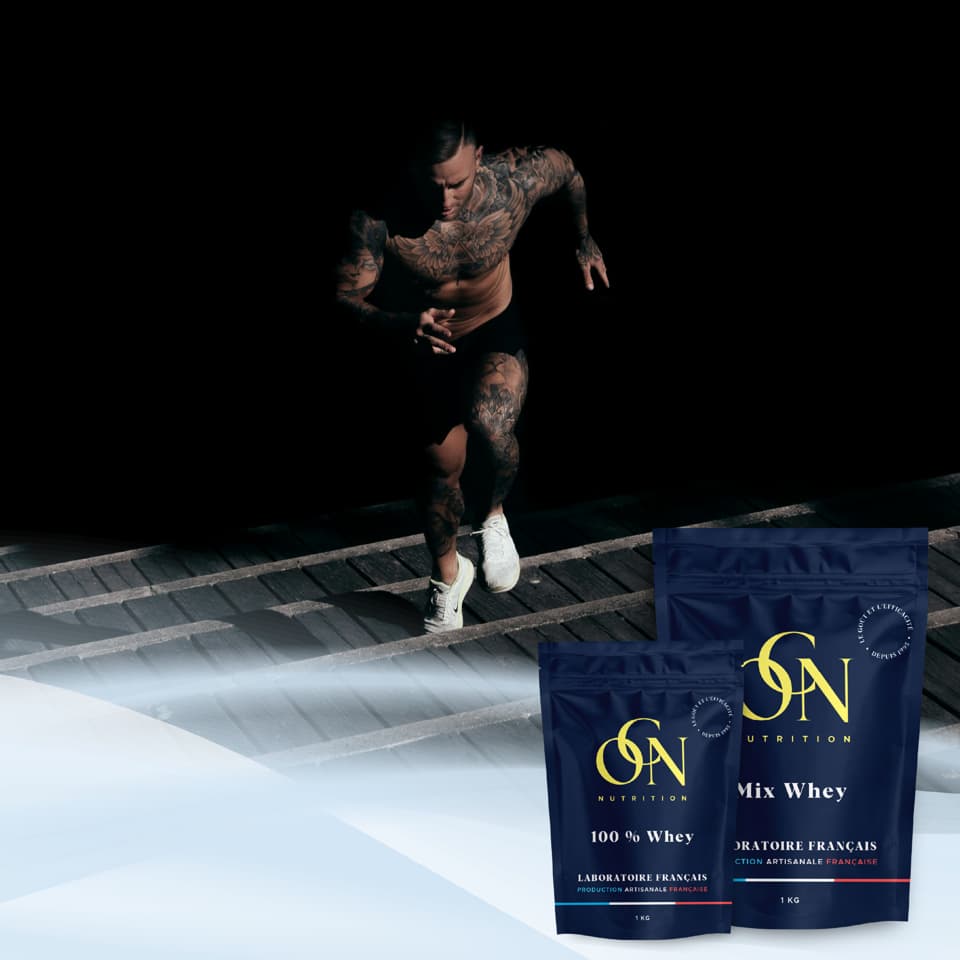
OCN Nutrition: product page, funnel, and average cart value
For OCN Nutrition, the objective was to rethink the Shopify experience around a more convincing journey on desktop and mobile. The project integrated a complete audit, funnel optimization, a more effective product page, and work on loading speed.
The results obtained show the impact of a well-prioritized CRO approach: a strong increase in conversion rate and an improvement in average cart value from the first weeks post-launch. In this type of context, every detail counts: how the offer is presented, the clarity of the benefits, the depth of product sheets, mobile fluidity, and the consistency between design and development.
You can consult all our projects on the Shopify achievements page, which presents different cases of e-commerce store creations, redesigns, and optimizations.
CRO audit or Shopify redesign: what's the difference?
A Shopify CRO audit and a Shopify redesign can be linked, but they don't address exactly the same need. A CRO audit primarily serves to understand what hinders conversion and to define priority improvements. It can lead to targeted adjustments without modifying the entire store. This is often the right approach if your site is technically sound, your brand identity remains relevant, and the problems are mainly in the hierarchy, content, key pages, or cart.
A Shopify redesign becomes more relevant when the limitations are structural. If the theme is too rigid, if the mobile experience is difficult to correct, if the templates no longer allow effective selling, if the design no longer matches the brand's level, or if too many applications weaken the store, it may be more efficient to rebuild a clean base rather than stacking corrections.
In some projects, the CRO audit is therefore the first step in a redesign. It avoids redoing a site based on subjective preferences. It provides clear direction: which pages need to change, which messages need to be strengthened, which functionalities are truly useful, which data needs to be tracked, and which existing elements should be kept.
When the audit reveals that the obstacles cannot be corrected by simple targeted optimizations, it becomes useful to frame a more global conversion-oriented Shopify redesign project to rework the mobile experience, key pages, cart, SEO, and technical base on more solid foundations.
In other cases, the audit is sufficient to trigger quick wins. A better-structured product page, a clearer side cart, simplified mobile navigation, more useful collections, or better reassurance can already significantly improve the journey. The right choice therefore depends on the current state of your store, your budget, your timeline, and your business objectives.
Why work with a specialized Shopify CRO agency?
Improving the conversion rate of a Shopify store requires a deep understanding of the platform. It's not enough to know the general principles of UX or digital marketing. You also need to know how Shopify actually works: Online Store 2.0 themes, sections, templates, metafields, variants, apps, cart, checkout, performance, tracking, customization constraints, and maintenance logic.
A CRO recommendation can look very good on paper but be difficult to execute properly if it doesn't take into account the theme, existing code, or installed applications. Conversely, a technically simple optimization can have little impact if it doesn't address a real buying obstacle. The advantage of a specialized Shopify agency is to connect strategic thinking with operational feasibility.
This dual expertise also allows for better arbitration. Should an application be installed or a lightweight feature be developed? Should the product template be modified or a specific structure be created depending on the ranges? Should a reassurance block be added or the main message be reworked first? Should a new cart mechanism be tested or the existing experience simplified? These decisions impact conversion, but also the store's performance, maintenance, and profitability.
At Agence Shop, we work at the intersection of e-commerce strategy, UX design, and Shopify development. This approach helps avoid audits that are disconnected from execution. Recommendations are designed to be useful, understandable, and applicable in a real Shopify environment.
When to call on Agence Shop to improve your conversion?
A Shopify CRO audit is particularly relevant when you feel that your store could sell more, but you don't know exactly where to act. This is often the case after an acquisition period: campaigns generate traffic, SEO begins to produce visits, the brand gains visibility, but sales do not grow at the same rate.
The audit is also useful before a redesign. Many brands want to redo their store because they find it outdated or less efficient. This is a good reason to ask questions, but it's not enough to frame a project. Before changing the design, you need to understand what is truly hindering performance. The audit then allows you to avoid a purely aesthetic redesign and build a conversion-oriented specification.
It can also intervene after a redesign that did not produce the expected results. A store may have been visually modernized without the real obstacles being addressed. In this case, the audit allows you to revisit the journey with an outside perspective, identify drop-off areas, and reorder priorities correctly.
Finally, the CRO audit is relevant for brands that want to better exploit their existing base. If you already have sales, products that work, customer reviews, active campaigns, and a qualified audience, every improvement in the conversion rate can have a direct impact on profitability. In this situation, optimizing the store can sometimes be more profitable than immediately seeking more traffic.
How does a Shopify CRO audit work?
The process depends on the size of the store and the desired depth of analysis, but the logic remains the same. We start by understanding your context: business objectives, priority products, markets, margins, acquisition channels, store history, technical constraints, and upcoming projects. This step prevents analyzing the site as an isolated object. A Shopify store is always linked to a commercial strategy.
We then move on to analyzing the journey. Key pages are studied on desktop and mobile, with particular attention to decision points: arrival on the site, understanding the offer, product selection, adding to cart, proceeding to checkout. When data is available, it confirms or refines the heuristic analysis. The goal is to identify discrepancies between what the store intends to do and what the experience actually allows.
The third step is to formalize the recommendations. Each important point must be linked to a concrete problem. A useful recommendation doesn't just say "add reassurance," but specifies which concern needs to be addressed, at what point in the journey, and in what form. This precision makes the audit actionable.
Finally, we can support you in the implementation. Depending on your needs, this can take the form of targeted optimizations, Shopify template modifications, a more complete redesign, work on product pages, an improved side cart, mobile optimization, or better tracking. The audit then serves as the basis for a clear roadmap.
How to measure the impact of CRO optimization?
Measurement is essential, but it must be interpreted with caution. The conversion rate depends on many factors: seasonality, promotions, traffic quality, stock, price, competition, brand awareness, advertising campaigns, economic context, and visitor behavior. Therefore, CRO optimization should not be evaluated solely over a few days, unless traffic is very high.
We recommend tracking several indicators together. The conversion rate is central, but it should be read with the average cart value, revenue per session, add-to-cart rate, checkout initiation rate, cart abandonment rate, mobile/desktop distribution, and performance by channel. This approach avoids hasty conclusions. A rise in conversion rate may be less interesting if the average cart value drops sharply. Conversely, a stable conversion with a higher average cart value can improve profitability.
On Shopify, it is also useful to track performance by page type. A highly visited but inefficient collection, a strategic product page that converts less than others, or a mobile page that generates a lot of abandonments can reveal specific opportunities. The challenge is to transform data into decisions, not to multiply spreadsheets.
When traffic volume allows, some changes can be tested incrementally. But not all sites have enough traffic to conduct statistically robust A/B tests. In this case, UX expertise, the quality of available data, and prioritization become even more important. The goal remains the same: improve the store without making random decisions.
FAQ about Shopify CRO audit
What is a Shopify CRO audit?
A Shopify CRO audit is an analysis of your store aimed at identifying the obstacles that prevent visitors from buying. It examines key pages, the mobile experience, product pages, collections, the cart, checkout, reassurance, analytics data, and Shopify's technical constraints to propose a prioritized optimization plan.
When should a Shopify CRO audit be performed?
It is relevant to conduct a CRO audit when your store receives traffic but does not convert enough, when your average cart value stagnates, before a Shopify redesign, after a performance drop, or when you want to improve the profitability of your acquisition campaigns.
What is the difference between CRO and UX?
UX concerns the quality of the user experience: clarity, fluidity, readability, navigation, accessibility, and ease of use. CRO uses UX as a lever, but with a more precise commercial objective: to improve the site's ability to generate orders, revenue, and better profitability.
Is a CRO audit enough, or should the entire Shopify store be redone?
It depends on the state of your store. If the foundations are solid, targeted optimizations may suffice. If the theme is too limited, if the mobile experience is degraded, or if the page structure hinders progress, a Shopify redesign may become more relevant. The audit helps make this decision based on concrete facts.
Can the conversion rate be improved without increasing traffic?
Yes. This is even one of the great advantages of CRO. If your store already receives qualified traffic, improving the buying journey can increase revenue without immediately investing more in acquisition. The impact, however, depends on traffic volume, offer quality, and obstacles present on the site.
What Shopify elements are analyzed during the audit?
The audit can include the theme, templates, sections, product pages, collections, menu, filters, side cart, apps, performance, metafields, tracking events, upsell mechanisms, subscriptions, bundles, and reassurance messages.
How long does it take to see the effects of CRO optimization?
Some adjustments can produce quick results, especially on highly visited pages. However, to seriously assess the impact, data must be observed over a sufficient period, taking into account traffic, seasonality, campaigns, and changes in stock or prices.
Can Agence Shop also implement the recommendations?
Yes. Agence Shop can intervene after the audit to optimize Shopify templates, rework product pages, improve the mobile experience, adjust the cart, strengthen reassurance, correct certain technical issues, or support a more comprehensive redesign when necessary. Call on the agency's Shopify expertise.
Want to improve your Shopify store's conversion rate?
I'm Olivier Romero, founder of Agence Shop. We conduct CRO Shopify audits to precisely identify the obstacles limiting your sales and prioritize the optimizations to be implemented.
UX, product pages, navigation, cart, mobile, tracking, performance, or redesign: the goal is to transform data and path analysis into concrete decisions capable of sustainably improving your store's profitability.
Discuss your Shopify CRO audit